Tag Archives: creative writing

Those Final Tweeks

23 Nov

epub-logoI recently received The Ferret Files back from my lovely packaging pals in XML format, so we’re nearly there now. The only thing I’m not 100% happy with is the rendering of the artwork. When it comes to physical print, which I fully intend to follow through on, the 8 x vignettes will be in with the text. For e-book, this isn’t possible if I want reflowing text enabled (the text has to sit top/bottom of the illustrations). I don’t really see this as an issue. Or didn’t…

The pics as submitted were trimmed to size, for wraparound text. As soon as they’re used in the e-book at this size, various readers try to adjust the pics for best fit. The result is best described as ‘a hall of mirrors’, with an end result that being a stickler for detail, I can’t live with. We’re currently working through getting this right. In the process of checking that the e-book is typeset correctly, I discovered a handful of errors with the text.

*Shock*

*Horror!*

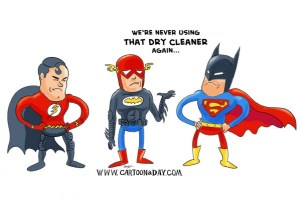
superhero-dry-cleanersNot that I’m obsessive, but I’m going to have to read the damn thing again now, from cover to cover, to make sure there’s nothing else I’ve missed.  Unless I trust in my one proven superpower.  When it comes to testing IT, I have this ability to zero in on any problem straightaway. I discovered it one lunchtime back in the day, when a pal of mine, who’d just been intensively testing an identikit program for the previous few weeks gave it to me to play with.  Within 10 seconds I’d broken it. If I recall, there were 8 x face shapes, 8 x noses, 8 x ears, 8 x eyes, 8 x mouths and 8 x hairstyles to choose from. That’s 262,000 combinations. Only one combination didn’t work and I found it with 6 button presses.

Here’s the question: do I trust in my superpower to have found the only 3 errors in the manuscript, or do I read Ferret again? What would you do?

(Seriously, who’d be an indie author…)

Save

Save

Save

Save

Get Back in the Box

15 Nov

cat1Creating characters is not something I’ve ever had a problem with. If anything, it’s the opposite – I’ve got far too many good characters screaming to be let loose who simply don’t fit in with the story I’m writing. If you try and cram them all in, then proceedings becomes overloaded. The only logical thing to do is park them in the box marked ‘spare characters’ and slam the lid tight to muffle their screams.  I’ll give you an example relating to The Ferret Files. Bob Bobson has been with me for a very long time. In a way, he’s Ferret’s surrogate dad, or at least his older brother. Either way, he was always there for Ferret when the boy was growing up. I’ve written pages of their adventures together. Bob is a good, solid character who I know like the back of my hand. As The Ferret Files progressed and I came to know the rest of the cast, they jostled for position, demanding more screen time and poor old Bob, who’s hard done to and takes things in his stride was steadily pushed out to the periphery. I’d intended to write four chapters from Bob’s POV, but once the pace of the story picked up, whenever Bob made an appearance, it slowed things back down again. One of the other characters would whisper in my ear that they belonged in such-and-such a scene, not Bob. I’d listen, give it try, and lo and behold, the pacing was back on the mark. Bob ended up as a minor character who we meet at the beginning of the book and is mentioned in passing a couple of times. His best scenes are all on the cutting room floor. He will make an appearance in book three, as he has an input into the plot. At the moment I’ve told him he’ll have his own Ferret short story (Curses) and being Bob, he’s happy with that.

My writing style is best described as ‘organic’, in that I framework the entire story before I begin, but once the gloves are off, I’m open to cosmetic changes. The major scenes remain the same but how the characters arrive at their destinations can alter. Really, it’s the difference between arriving at a posh club by cab, wearing a suit or arriving dressed as a clown, riding a unicycle. Cyrano, the elegant Frenchman would never arrive in anything but a cab, whereas Ferret might start out in a cab and end up arriving late on a unicycle…
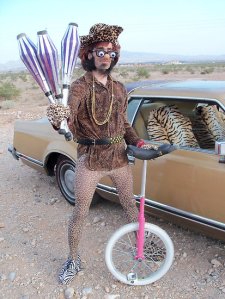
clownTo begin with, I couldn’t tell the difference between a character leading me off down a rabbit hole for their own gratification, and a change of direction by a character that made the story better. In the unicycle example, Ferret might meet a really interesting street entertainer called Prince Regent. Now I’ve done it. The street entertainer, who was an extra with no lines now has a name. You don’t get called Prince Regent unless you have an engaging back story. So now Prince Regent has a speaking part. Before long he’ll be demanding I promote him to minor character, then if I don’t watch it he’ll want a show of his own. This is a distraction. Prince Regent – it’s off to the box with you, to keep Bob company.

After all the jostling and maneuvering, we end up with a big scene where all the main characters arrive on time, exactly as they should. It’s then that I realise that someone is missing. Bob was supposed to be there as Ferret’s foil and there’s now a gap. Bob pokes his head out of the box and shuffles along, ready to play his part. Except I’d need to bring him back in earlier scenes, otherwise the continuity is shot. And there’s no room for him in the other scenes, because the characters with the massive egos have stolen the show. Prince Regent says he’ll do it. On his unicycle, eating french fries. No, no, no! Both of you, get back in the box! Ferret will have to use a random, incidental character as his foil. It won’t be as funny as Bob being there, but it requires less of a rewrite. One of the waiters steps up. He has a name, you know. Alberto. Except he’s not Italian, he’s from Romania. He speaks English like an Italian because an Italian taught him English. And there you go. Suddenly, Alberto has a speaking part and an interesting back story. It won’t be long before he too wants to be a minor character, and after that he’ll want his own restaurant and TV show. Sorry Alberto, it’s off to the box for you too…

Interestingly, the major villain of Ferret book two is a character who’s been in the box for twenty years. I wrote a couple of unpublished short stories featuring him that long ago. He always wanted more. And now he’s getting it. His gang has changed, as in one of them didn’t make the cut. So it’s back in the box for him. The box has an infinite capacity and a life as long as yours. It doesn’t have to be emptied immediately or topped up forever. It’s your box, to do with as you please.

cartoon-waiter-009NOTE: If you’re stuck for characters and you have a story that requires a unicycle riding clown called Prince Regent who juggles French fries, or a Romanian waiter called Alberto who speaks English with an Italian accent, feel free to give them a good home. Prince Regent may well turn out to be a killer on the run. Alberto is more likely to be threatened by the mob for refusing to pay protection $$$. Bob stays in the box. He’s not for sale or rent. Unless he gets written out of book three, in which case he’s up for grabs. IN the meantime, if the Irish band he sings in makes it big, he’s off on tour to have a few adventures of his own…

Save

Save

Save

Pre-publishing Purgatory

7 Nov

PurgatorySometime back in April I thought I was ready to publish The Ferret Files. That is, until I submitted the manuscript for a copy edit. This was supposed to be the final step in the rewrite/edit/rewrite wash cycle, but what came back had very little red ink on the page. Most people would think “Hey, great – I’ve done a fantastic job.” But not me. Having run a documentation team, I know what a thorough copy edit looks like, and when there’s not enough red ink it makes me think that the editor has performed a half-a$$ed job. So I took the liberty of seeking a second opinion. As it turns out, I was right to do so. The first editor had done a half-a$$ed job. There was so much he missed, I could easily write a novel on how not to perform a copy edit. Rather than dig up the drains, I chose to move on and finish what I started.

In a previous article, I reckoned I’d be finished by v13. I was wrong by 2 versions. There were some minor changes needed before I sent the finished manuscript off for proof reading, and a whole bunch more once it came back.

off-to-the-racesI’m now out of Edit Hell and in Pre-publishing Purgatory. This is when the novel plus artwork is turned into an e-book or hard copy. After that, it comes back for sign-off and then we’re off to the races. Being of sound mind but somewhat compulsive when it comes to formatting, it’ll take me a couple of days to check everything off. Once that’s done, Ferret will be out there and I can go lie down in a darkened room with a vodka drip feed and say ‘wibble’ a lot.

Who’d be an author, eh? There must be more efficient ways of torturing oneself (he says, whilst plotting the 2nd and 3rd novels in the Ferret trilogy).

Save

Save

Save

Edit Hell

29 Jul

They say that a piece of Art is never finished, as in the artist will always find something he/she isn’t happy with, which requires a bit of a tweak. I am that kind of fiddler, and it doesn’t help reading through yesterday’s output before starting today’s.  I like working this way, the only thing is, it slows down the whole process of finishing a story. But, we’re well past that point now, down the final furlong.  I’m not changing any more bits. No more rework. Honest.

And then the suggestion comes from my copy editor – ‘this scene here, it’s good, but if you do it like this it’ll have more impact…’  And damn, she’s right. Three spots, three bits of rework, three scenes that now whiz rather than just motor.Troll

Welcome to Edit Hell.

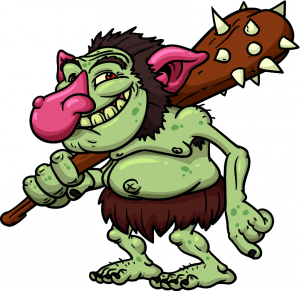
As each section is redone, it has to be re-read and re-checked. The Comma Fairy thought she was headed for the beach, but she’s been pulled out of retirement and redeployed with her bag of tricks. Lurking in the background is the Split-Infinitive Troll – sentences pass over his bridge, and he slams his hammer down, causing words to jiggle about (damn, he even got me on that last sentence). The Definition Gremlin is my worst enemy by far. You know – when you misspell a word, but it’s still a word, just not the right one – so the Speelchucking Goblin lets it through the gate.  Auger was the last word said Goblin gave a free pass to. It was meant to be Augur, as in someone who tells the future. Instead, I ended up with a tool for boring through wood. Dur!  Another one that made me laugh was ‘chicken coup’. The Goblin let that one through without so much as a light frisking. I’m sure a coup by chickens would be interesting to watch – it sounds like a scene straight out of Animal Farm, but what I actually wanted was an enclosure for chickens, which is a coop. Bad Goblin!

So down the final straight we go. Just got to re-read the whole novel end-to-end for the umpteenth time, making sure that the Continuity Homunculus hasn’t messed the running order up (there goes the damn Troll again) and we’re done.

Sleepless nights? Not me.

Since I started taking a hammer to bed, that pesky two am in the morning Brilliant Ideas Gopher doesn’t stand a chance…

Nearly There

20 Jul

DucksWhen I decided to write a novel, I had no idea it would take so damn long to get all those pesky ducks quacking from the same hymn sheet.  I started in earnest in November 2012 and now we’re in July 2016.  The Ferret Files is due for release as an e-book the first week of August 2016.

So what have I learned over this time?

  1. Don’t take ‘no’ for an answer.  Many moons ago, I had a meeting with Micheal Jacob, who was head of the BBC’s commissioning arm for new shows ( I was trying to get a sitcom off the ground, with a bunch of pals) and he asked me in the very first pitching workshop we did what it was I really wanted to get made? Well, I thought about it, and thought about it some more. He looked at me knowingly, and said: “It’s not this show, is it?” And he was right. His advice was to find an idea that I truly believed in, then refuse to take ‘no’ for an answer. Whatever it took, believe in it, live it and make it happen.  Ferret is it. When I decided to set-to writing, I spent some time going through all my old notes dating back 15 years and rediscovered the fabulous furry Ferret.  There were a dozen one-off stories and to begin with, I tried to weave them all into one book.  Clue: it didn’t work.  So I took the best story I had and made it into the first novel.
  2. I can’t write and do a full time job.  Tried it, it doesn’t work.  The only way for me to write anything other than magazine articles, reports and short stories is to go at it full-tilt, full time.  3 years and 8 months sounds like a long time, but that’s elapsed time rather than time actually spent on the project. Broken down, Ferret has taken 42 weeks to get from idea to finished item, which I think is pretty good for a first novel. Of course, I’ve also broken the cardinal rule of being a first time author – don’t give up the day job…
  3. Get a support network.  Early on, it was Twitter and WordPress.  Then, when the manuscript had progressed sufficiently, friends and family, not forgetting the artist of the piece, Richard Argent. There was a point when I was hiding behind the illustrations, as in asking everyone what they thought of pictures rather than the text. Every writer goes through periods of self-loathing and hating the novel, it’s part of the creative process. Miraculously, whenever I was having a down period, a picture would appear, either in draft or completed form.  Knowing that someone else gets the characters was really important.  I can’t thank Richard enough for those lifts, especially as he didn’t even know I needed them.
  4. Do it for the love of Art, not the $$$. Enjoy what you do and make your finished work an expression of you. If I’d wanted to bring Ferret in cheap, I could have lost the artwork. But, I wanted to do something unique. Personally, I think the finished novel is better with the pictures – feedback will tell.  One change I made in the final draft, after talking it over a lot, was to remove the names of celebrities and replace them with text such as: ‘a well known English footballer and the ex-popstar missus’.  It’s a detective novel, go work it out. If you’re still stumped, go look at the illustrations. Russell Brand is brilliant.
  5. Find a good coffee shop. Not the Amsterdam type of coffee shop, somewhere where you can take your laptop, have a decent cup of coffee and experience life.  Remove those headphones, and watch and listen. Writing is a solitary occupation, and when you get blocked-up no amount of internal dialogue will unblock you.  It has to come from outside. Most of the situations and characters I create as an author are based on real life scenarios, either things I’ve experienced or stories people have told me. Occasionally, I borrow stories I overhear. Sometimes I borrow people. A coffee shop is a good place to start. If anyone asks you what you’re doing, tell them. At some point, you’re going to have Ferret2to talk about your work and practice makes perfect. So bat some ideas about, see what kind of feedback you get. Strangers are often far more honest than those who are close to you.

That’s it for today.  Now, where did I put my pint of Fursty Ferret?


What’s in the Box?

18 Jun

The Ferret Files

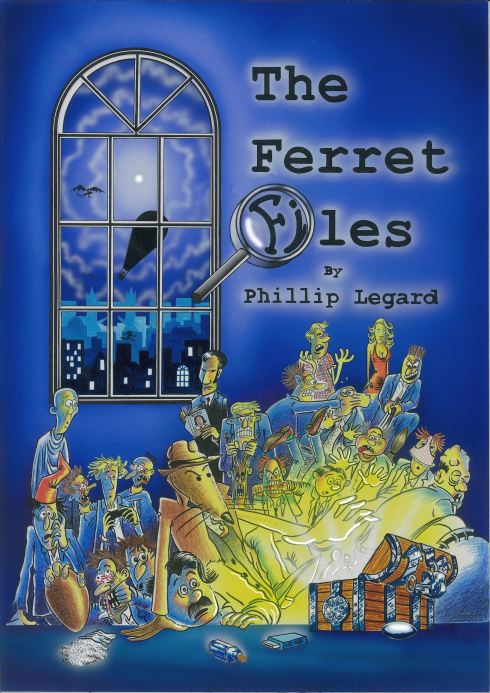
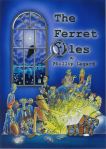
Thanks to Richard Argent over at ArgentArt, we now have a cover.  I’m very pleased with the result, which took a lot of work to get right.  It’s not what I originally had in mind, but that simply didn’t work in the real world – and besides, this is much more fun.  Richard took inspiration from Will Eisner’s work on ‘The Spirit’ comic.  The composition is spot-on, and there’s a lot going on, hidden in plain sight which relates to the novel.  You’ll have a great time decoding it all, I’m sure.

For now though, the big question is what’s in the box?

You’ll have to read The Ferret Files to find out.  Not long now, honest.  I know I’ve said that a few times over the last six months, but this time it’s true.  I had a misfire with a copy editor who didn’t perform as expected, so had to draft in a replacement, who did a much better job.  However, it’s cost me two months in wasted time to find another editor and work through all the comments.

Fingers crossed – I’m aiming to be ready for the first week of July.

Save

Now I’m excited…

26 Apr

Things are now proceeding with pace.

I received the manuscript for Ferret back from the editor’s yesterday, with only two flags raised, neither of which are red. Both potential libel, apparently… There are only so many things one can say about celebrities. I thought I was being insulting, but the editor thinks differently.

Ho, hum. No biggie.

Onward!

We’re aiming for e-publication in June, just waiting on the cover art.

Ferret in Highgate

Artwork Complete

5 Feb

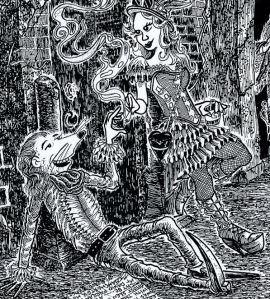
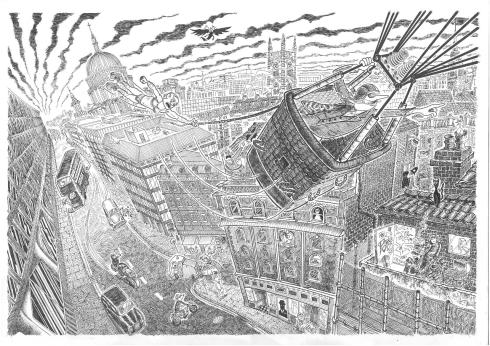
This is the fourth and final illustration for the Ferret Files, as drawn by my good pal Richard Argent, over at Argent Art.

It’s been a long old slog, I thought it might take 9 months to write the novel – we’re now at 3.5 years!  Admittedly, the actual time I’ve been on the project full time is 8 months – about to take 3 weeks off and finally nail the sucker.  Then comes the scary bit…

Balloon Flight

The (In)competent Secret Society

20 Jul

knights_templar

I’ve been fascinated by secret societies ever since I read a book called ‘The Holy Blood & the Holy Grail’, back in the 80s.  Dan Brown took the fabric of this investigative piece of work, added a plot and called it the Da Vinci Code.  If you happen to be a fan of the secret society genre, you’ll find that the Knight’s Templars, the Freemasons and the Jesuits are pretty much responsible for everything that’s happened behind the scenes from the twelfth century onwards.  In fact, the more you read, the more brain knots you’ll end up with, as each author argues persuasively that it was their favourite society who were responsible for this or that event, and not another author’s.  Fast forward to today, and the vast array of secret organisations attempting to control the world are mind boggling, including in their number the Trilateral Committee, the Knights of Malta, Skull & Bones, Bilderberg, etc.  All of these societies are presented to the layman as totally omnipotent, in control of our lives from the day we’re born.  Occasionally, member’s lists sneak out, and lo & behold – everyone who’s anyone is a member of them all.

Before I go any further, let me state that I am not and never have been a member of any secret society, although obviously, if I was, that’s exactly what you’d expect me to say.  D’oh!  I was once a member of Round Table, but that’s: a) not a secret club, and b) a charity organisation.  What I discovered from that experience is when you throw a load of successful businessmen in a pot, add a framework for the purposes of imposing order, and stir, what comes out the other end is not necessarily as successful as its constituent parts.  This is mainly thanks to infighting and vested interests.  The same can be said of Parliament and the Senate – MPs and Senators do what is right for them and their backers, not the people who put them in power.

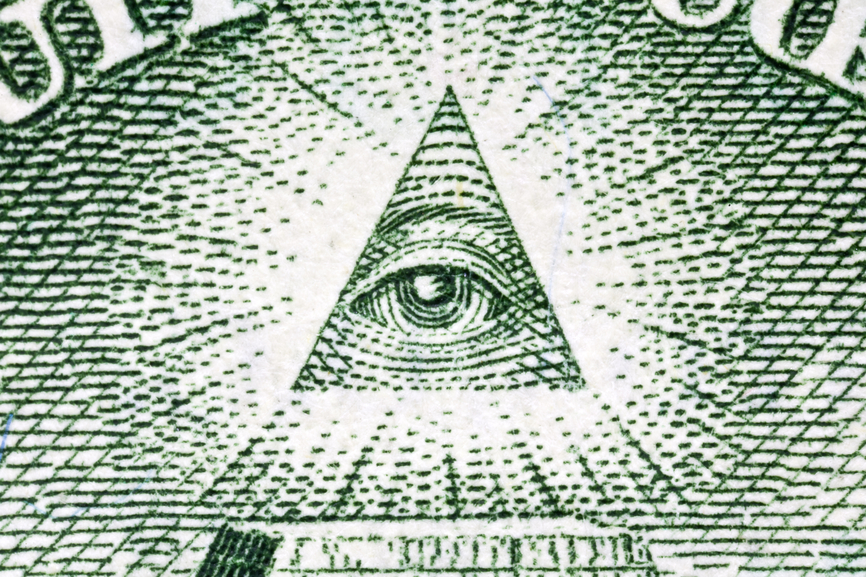
Back of the US one dollar bill.

Back of the US one dollar bill.

Given that this is how things work, I have to ask whether the idea of the all-seeing, all-powerful secret society that cannot be beaten and never makes a mistake is fact the truth.  Perhaps that what they want you to believe, because the truth would shatter their carefully concocted image.  Certainly, if everyone who’s anyone is a member of every society going, then their vested interests will conflict between societies, causing proceedings to grind to a halt.  Plus, the Anyones will never have any time to do any real work, because they’re so busy with their secret society schedules, they can’t fit the day job in.  Just a thought, but it’s one I like very much – the incompetent secret society that blunders its way through history, screwing up every major deal it’s involved in.  When they try to hint how powerful they are, even that continually goes wrong, with the result that they’ve never been mentioned in print for the whole of their 200 year history.

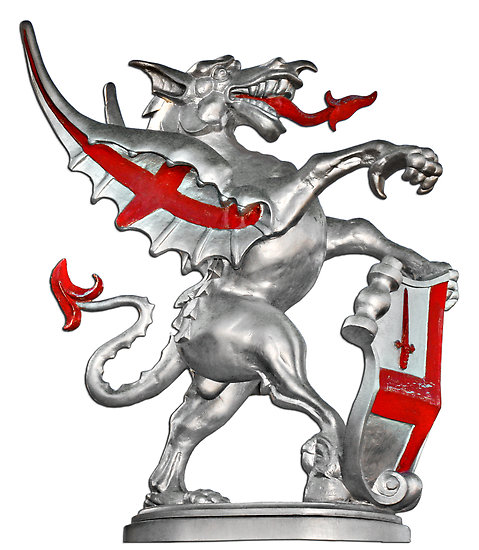
City of LondonWith most of the protagonist Vs Secret Society plots, the hero is desperately trying to outwit the bad guys and solve a mystery before their men get him.  Now flip that on its head.  What if the protagonist is a member of an incompetent secret society who find it difficult to recruit new members because no-one has ever heard of them.   The only thing they’ve been able to do is infiltrate the world of finance (City of London), and they’ve made a massive dog’s dinner of that, thanks to corruption, vested interests and plain stupidity.  This is the world in which Ferret finds himself – he is that protagonist.  And he’s had enough of taking ridiculous orders, he wants out.  What happens when one tries to leave an incompetent secret society that has a habit of handing out concrete flippers to those who want to leave?

ferret-files-cover-sml

Purchase Ferret

You’ll have to read the novel to find out.


Save

It’s a Wrap

8 Jul
Ferret in London

Ferret in London

Thirty months ago I set out to write a novel, not really having a clear idea of where to begin.  Being the sort of chap who learns best by doing, I threw myself headfirst into the task of producing a framework with major plot points.  It took six weeks to create the novel’s back story and the character arcs.  The writing commenced shortly afterwards and I proceeded at pace, adhering assiduously to the plan.  Two months in, I published some excerpts to this blog and after considering the feedback, realised that what I’d proposed was: a) far too long for a first book; and b) was not going to fly in its current form.

Rather than soldier on, I changed track, rethought the plot and cut the size down, turning one book into two.  In the process, I was forced to edit out two of my favourite scenes.  That really hurt.

The first draft took nine months nearly full time.  I spent roughly 4 days a week, 8 hours a day writing, and 2 days a week reading advice columns, character hints and other writer’s blogs.  All very useful stuff and I urge anyone who’s struggling with a first draft to do the same.  The ending was all a bit rushed, I needed to get it finished so I could go back to work.  So much was missing, so many loose ends untied.  That was June 2013.

Steady, cowboy

Steady, cowboy

Two years later and the second draft proper is finished, with the ending now complete.  One of the advice columns I read – I can’t remember who said it, or I’d post a link – but paraphrased it goes like this: think of yourself not as an author but a pilot.  The audience has climbed aboard your plane, participated in the take off, flown the flight.  If you’ve done the catering right, they’re all still aboard (apart from the ones who freaked and parachuted out early on).  Now, they’re trusting you the pilot to land the effing plane, so you better not disappoint.  In the case of Ferret, the plane has an outbreak of snakes, there’s a pair of armed terrorists aboard, food poisoning has incapacitated the flight crew, the landing gear is jammed and there’s a storm directly ahead.  Oh, lordy…

Truth be told, it’s the most fun I’ve had in years.  Well, since IBM declared me persona non grata for producing a series of films, with the participation of their top brass, which supposed the firm was run like the mafia.  They terminated my contract and tried to impound and incinerate every one of the DVDs.  Fortunately, they failed.  Anyone who know me knows that every once in a while I have to create some noise and cause trouble.  It’s a genetic trait – I blame my father for instilling in his children a healthy disrespect for the establishment and their organs of justice.  Company newsletters were my thing for a while.  Three times I went too far for the liking of management, collecting one written and one verbal warning.  Fidelity Investments took great exception to a piece about tattooing barcodes on the back of their employee’s necks and checking them in and out with a barcode reader, for security purposes.  Shortly after that I moved on to short stories published in various magazines, regarding working practices in IT, with names changed to protect the guilty.  The guilty may not have spotted themselves, but their co-workers did, which forced me to switch to a series of pen names.

All in the Edit

All in the Edit

Ferret ups the ante considerably.

Whilst it is a work of fiction, it takes many real life experiences garnered from hanging about with consultants, working in high finance and on confidential government projects.  I’ve not set out to spill any secrets, merely write a tale of how these organisations behave under the covers.  Believe me, this is a full-on cage rattler – lord knows, I’ve taken enough time to get there.

I’m now commencing the final edit, which I’m really looking forward to.  I know from making movies, that the editing studio is where those six hours of footage become 5 minutes of freaky fun.  Hard work looms, but I can’t wait to see what comes out the other end.


NewClear

I deconstruct secrets hidden in plain sight. I'm not always right, but all methods are shown so you know how I reached my conclusions!

Piece of Mindful

How easy it is to make people believe a lie, and how hard it is to undo that work again! (Mark Twain)

Gabriele Romano

Personal Blog

POLITICAL MOONSHINE

We are here and it is now. Further than that, all human knowledge is moonshine. -HL Mencken

The Slog

FOR RADICAL REALIST FREE-SPEECH REVOLUTION

Literary Avenue

Take a stroll along the Avenue of Artistic Ingenuity

Books and Mor

Let's Read

Change The Code

Live Your Best Life

Flash-365

Oh! Take a shit, read a story. - My Mother on flash fiction

The Renegade Press

Tales from the mouth of a wolf

Debbie Young's Writing Life

Hilarious, heartwarming mystery & mayhem set mostly in the Cotswolds

Amber Jones Barry, Editor

Making marks to achieve better copy.

The Ferret Files

The home of London's Premier Detecting Consultant

Short Tale Shrew

A Flash Fiction Writing Community

Natalie Breuer

Natalie. Writer. Photographer. Etc.

Nail Your Novel

A blog about writing, publishing, self-publishing and bookish doings by Roz Morris

OffGuardian

because facts really should be sacred