
 I’m busy learning how to market e-books, having done very little research into the subject prior to publishing my first novel. I have a very curious nature, so reading and learning new things is not something I run away from – rather I run towards the opportunity. Having spent around ten days investigating how the e-book / online publishing business works, I’m reminded of something that Mark Twain once said:
During the gold rush it’s a good time to be in the pick and shovel business.
Although the odd person struck it rich during the California gold rush of the 1840s & 50s, those who made a ton of money were the people selling the tools with which to locate, extract and refine gold. I’m guessing approx 1:10,000 struck it rich, whereas all 10,000 required a shovel.
The prospecting business model can be applied to many areas of life. Back in the early days of the Internet, there was a rush for dot.com domain names. Everyone was busy registering everything in sight, in the hope of striking it lucky and selling their domain name on to a big company that was slow off the mark, thus pocketing $million$. There were one or two notable sales made before the rules were changed to make domain squatting an offense, but when the dust cleared the folks that made a mint out of the domain name gold rush were the registrars not the squatters.
What I’ve discovered in my foray into online publishing is that there are a heck of a lot of peeps out there in internet land flogging shovels of every shape and size. Naturally, they’re not called shovels, but that’s definitely what they are. For instance:
- A WordPress blog is free. However, if I want a snazzy domain name rather than domain.wordpress, that’s $20 a year please.
- If I want to make any mods to the standard WordPress code, I have to move to a dedicated server (for security reasons). That’s about $5 a month. I’m thinking of doing this anyway, as WordPress won’t allow me to host a shop.
- The mods in question are PHP code extensions such as email address sign-up. WordPress does the sign-up basics for free, but it’s not possible to push the option at the casual reader. Whilst I can get a basic slab of pop-up code for free, I can’t install it. If I move the website, then the pop-up will contain ads from the creator. In order to get rid of these and have full control over page placement that’s more $$$ please. The full service from a reputable email list provider BTW is $10+ a month, depending on numbers, so the free option is attractive cost wise, it just looks a bit cheap.
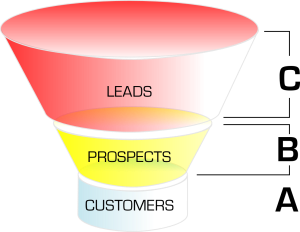 Why do I want to create an email list? Well… according to research, most people visit a website once and don’t go back. Getting their email address is a means to continually poke them remotely with super offers until they cave in. Get my other novel for free. Get the first book in the trilogy for free. Blah, blah. An email list is your list of valued customers, and as an author it’s your most valuable asset next to your published works(s). I’ve visited the blogs of other authors to see what they’re doing, and indeed the successful ones are prompting visitors to sign-on to the mailing list. In sales terms, this is known as the ‘Sales Funnel’ and it’s the modern equivalent of making sure you get a prospective customer’s phone number before they leave the shop. After that, it’s simply a case of hassling them in the nicest possible way until they eventually surrender to your charms.
- Next we get onto likes and reviews. Just like with Twitter followers, I can go to a dodgy site and buy tranches of likes for a Facebook page. Personally, I think that’s cheating. The Ferret Files Facebook page has quite a few likes, which were accrued via Facebook paid advertising. It’s working out at $15 per 1,000 likes, but the likes are real not made up. Reviews are more tricky. I can buy 100+ 5***** reviews on Amazon fairly cheaply. Or, I can go for free reviews which take an age to get back and in truth could be only ** or ***. Again, I think that buying reviews is cheating, although it’s very tempting. Certainly better than no reviews. As you probably realise by now, it’s impossible to trust Twitter followers, Facebook likes and Amazon reviews, but customers do (including me).
- There are a multitude of self-help books that detail what I’ve described above and how to do it. Everything I’ve written about can be discovered for free, but that takes time and time is $$$. Buying someone else’s experiences is yet more $$$ please.
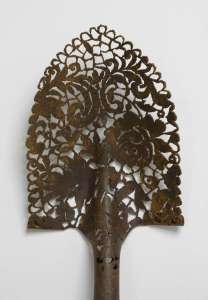 I haven’t even covered the shovels that are for sale prior to writing a novel. You can buy advice on: better writing, better structure, how to develop characters, killer beginnings, killer endings, pace, etc. In fact, it looks to me like there are vastly more people out there selling shovels for writing and publishing than there are authors successfully selling golden novels. Perhaps that what I should do next: create another shovel. It’ll have to be a very pretty shovel that no one else has yet made, full of fantastic new ideas on how to do all of the above at very little expense.
What do you think? Does the world of online publishing need more shovels, or is there not enough gold out there to warrant it?










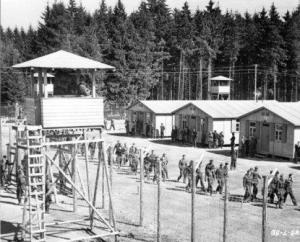

 A few years ago I watched a documentary about the use of drugs in war. The premise of the show was that Hitler hadn’t actually intended to invade the Low Countries & France the way he did. First a bit of history: the German offensive against the Allies began on the 9th May 1940 with the invasion of Luxembourg and within a couple of days both Luxembourg and Belgium had fallen. Unlike most sensible tourists, the Panzer divisions didn’t bother to stop in Brussels for beer, they just kept on rolling. By the 19th May, the Germans had reached the English Channel. After a short delay, which allowed for the evacuation at Dunkirk on the 26th May, the advance resumed and shortly thereafter France fell. Allegedly, the lightning advance to the Channel took place because the Wehrmacht were ramped up on amphetamines (pervitine, which is actually crystal meth) and couldn’t be reasoned with. After ten days, all the meth they’d imbibed took its toll and the army collapsed into a deep slumber, thus giving the Brits a narrow window in which to organise their escape.
 I found this to be a fascinating explanation as to why the Germans just stopped when they had the Allies on the ropes. Had they continued their advance the Second World War would have played out very differently to the way it did. It’s a good story, but is it true? It’s certainly true that the Germans had a secret drug programme (Projekt D- run out of Kiel) and it’s certainly true that they built up a massive reserve of pervitine prior to invading Europe. It’s also true that pervitine addiction and withdrawal was a real problem in the ranks. German officers knew from their experiences in France that prolonged use of pervitine caused sleep disorders and irrational behaviour. It was still used though, for the duration of the war. In order to negate the German advantage post-D-day, the American army issued speed capsules to their men. To counter this, the Nazis issued massive quantities of drugs to their Fuhrer, in the belief that it would turn him into a superhuman. As with nearly all people who take large amounts of experimental drugs, this did not end well.
 A bit more research into the history of drug use in warfare, and you’ll find that every army has been up to it since records began. The Incas – off their heads on cocaine. The Zulus fought on a mixture of tobacco, marijuana and hallucinogenic mushrooms; they believed that the fungus made them bulletproof. Again, this did not end well.
 I have a pretty strict morning ritual that I like to follow, which starts with fruit tea, then breakfast and finally a shot of espresso. If I’m on the road for any reason, then between hotel breakfast and my place of work I’ll drop into a coffee shop. Nowadays, I stop at one espresso. Previously, I used to drink three or four, until I had an unpleasant episode and my doctor got involved. I gave up coffee for nine months after that, until temptation finally got the better of me. We were in Italy – the home of espresso – when after a particularly enjoyable meal the waiter asked if we wanted coffee. I’d been there three days and said ‘no’ to espresso every time, but this time I cracked. It was seven o’clock in the evening when I drank that little cup of joy. Seven o’clock the next morning, I finally got to sleep.
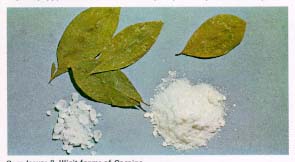 h ground up kola nuts obtained from a herbalist (a source of very strong caffeine). The result was lift-off, followed by a mid-air explosion. FYI: mate de coca or coca tea, which is made from coca leaves – the source of cocaine – isn’t available outside of South America. If you insist on typing ‘mate de coca buy’ into Google and following your nose, that’s entirely your business.






 The Ferret Files