
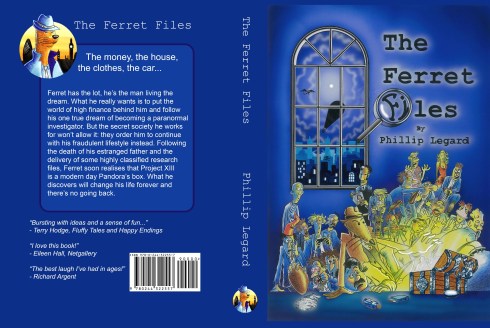
The back cover gives the blurb of what to expect inside. I’m really excited. It’s the best thing I’ve ever written by far! Available very soon.
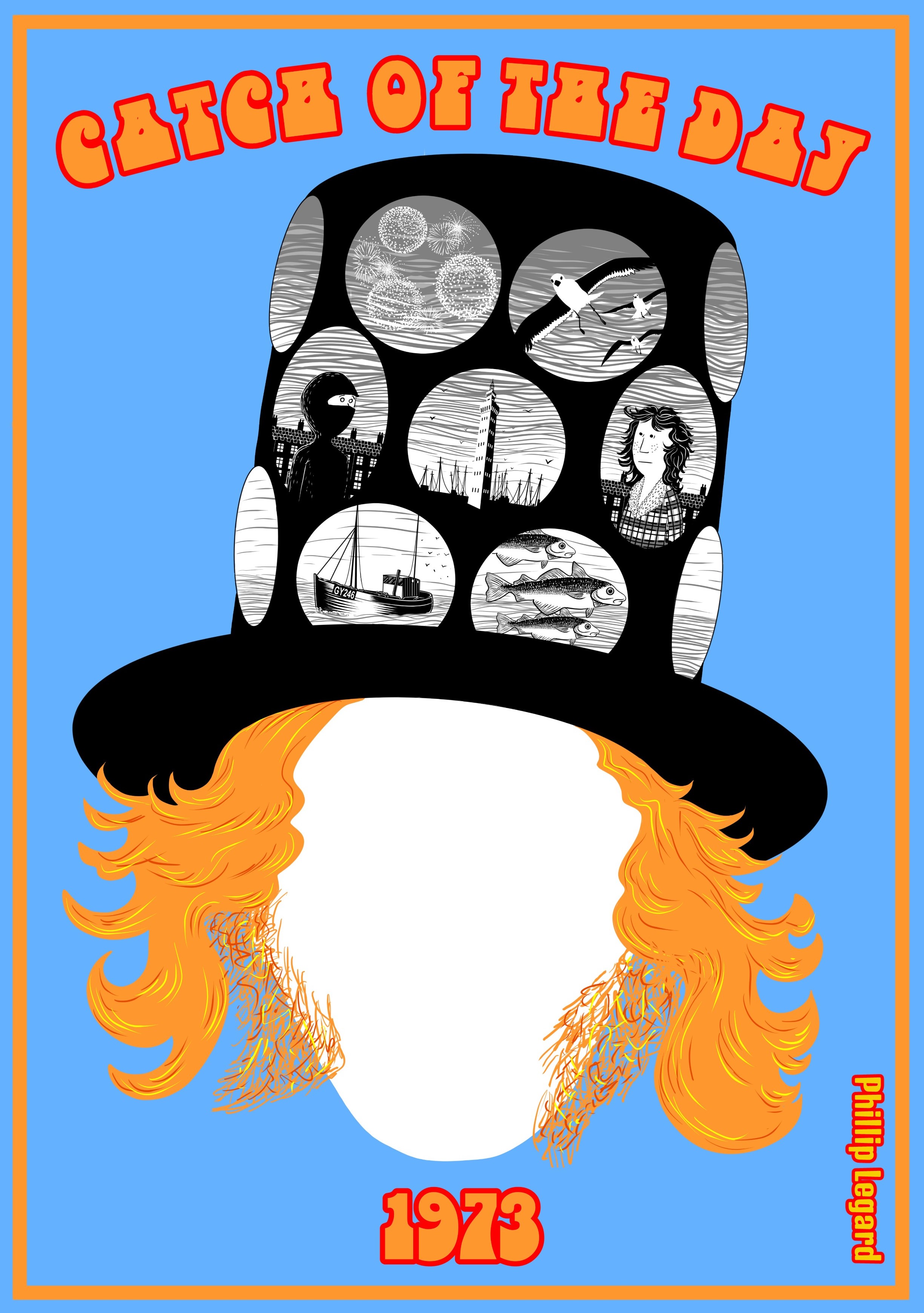
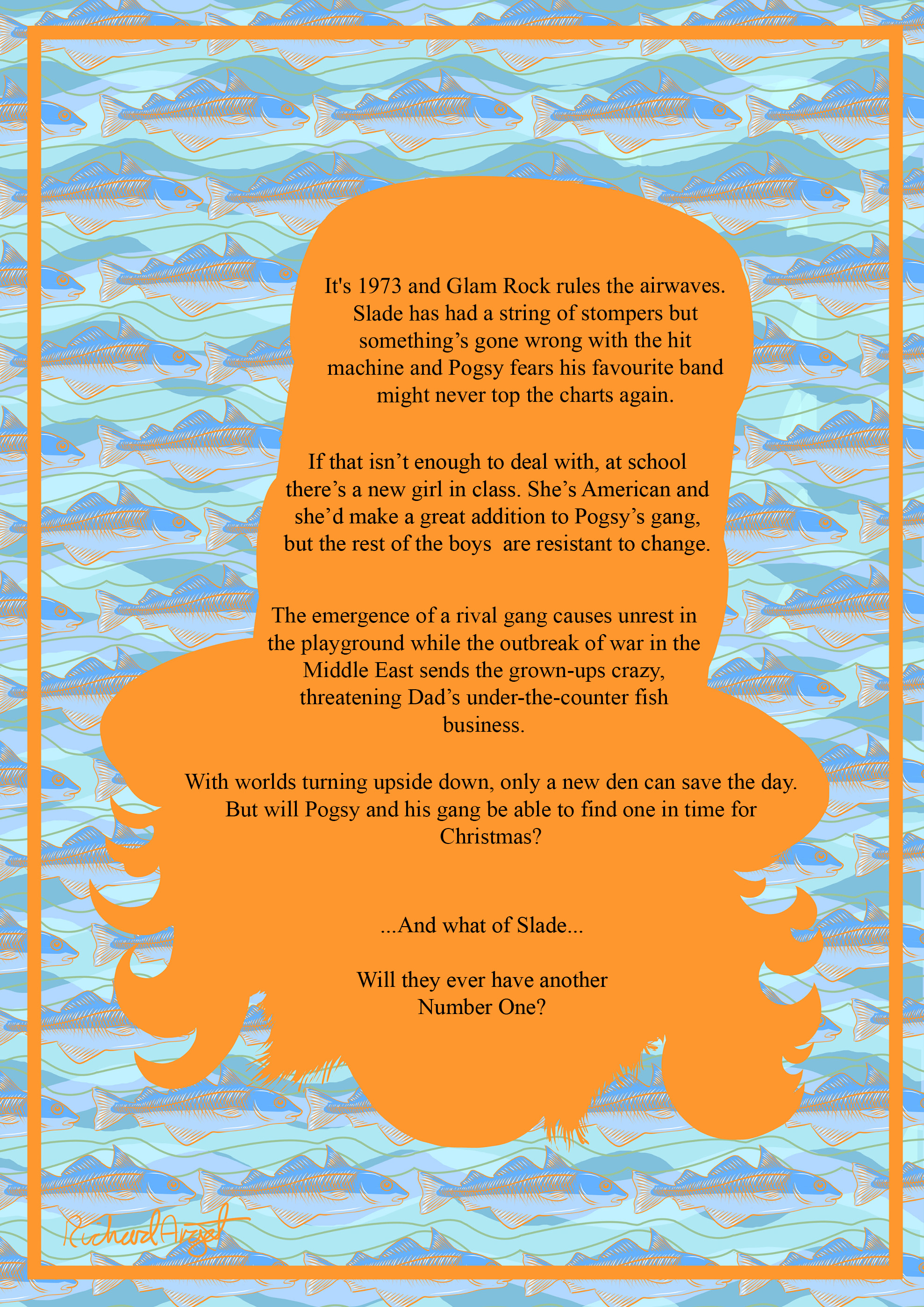
The back cover gives the blurb of what to expect inside. I’m really excited. It’s the best thing I’ve ever written by far! Available very soon.
I’m almost ready with novel #2 now. What began as a lively jaunt through the winter of 1973 and the the summer of 1974 soon became a long and drawn out saga. There was also this worldwide phenomena known as ‘lockdowns’ to contend with. Thanks to the internet and my familiarity with my hometown, this wasn’t too much of an issue. I also found that folk who were confined to their homes were happy to chat on line and fill in anything that was missing in the way of historical fact.
When it comes to writing I’m a big fan of employing the Daniel Day Lewis method. That is, go live it and then write about it. Thus it was, that in the summer of 2020 I found myself listening exclusively to Glam Rock and dressing like a grandad who hadn’t had a wardrobe change for 50 years! It was a lot of fun, done mainly in private thanks to the inability to move around a lot. Let me tell you something about 1970s fashions: the materials are not good. Polyester and crinoline cling to your skin, they don’t breathe well and you get very hot and sweaty. Men didn’t really bathe in the 70s, and they didn’t believe in deodorant either. The end result was a decade or more of smelly blokes who hid the stink with aftershave such as Brut (cat pee) or Old Spice (dog pee). Needless to say, I only took my excursion to the 70s so far.
What I hadn’t realised when I began writing was that Glam Rock came to an end in the winter of ’73. Sure there was the odd hit into 1974 but the movement was over, killed by a rise in inflation, civil unrest and unrelenting strikes. The next big musical scene didn’t come along until Punk got serious, and that was 1976. I found that I’d written a book intending it to be about Glam Rock only to discover that Glam had vanished from normal life. It took me 9 months to reach the decision to split my work in two – I’ll write about the mechanics of splitting a book in a separate blog entry – and a further 9 months to rework what I had into some semblance of a story.
The end result is Catch of the Day: 1973.
I’m very pleased with the result, but I know it won’t be for everyone. If you hanker for the 70s having grown up in this era, or you love Glam Rock, or you want to know what it was really like in the UK 50 years ago, then I’m sure you’ll love it. There’s a lot of YA lit that focuses on girls and heroines, with boys being very much out of fashion. This is a book about boys doing boy stuff. It’s in the mold of Just William or other boys’ tales from this era, except it’s set in a fishing town in the gritty North. If you want to know what northern lads got up to, read on. If you’re a soft southern pansy then you’re gonna have to man-up. Boys were in charge back then and girls were second-class, which for me was something I thought worth exploring further, hence the tagline: You can’t have a girl in the gang.
Everything that occurs stems from this idea. What might happen when a lad tries to introduce a girl he likes into a gang of 10-year old boys? Nothing good is the short answer. Throughout the 70s girls were furniture. The first proper girl-in-a-gang that I’ve found is (Maid) Marion, who appeared in Robin of Sherwood, which is early 80s. I rewatched it recently and it’s landmark TV. This Marion is still a lady of the era, but she can use a bow and arrow and her opinion counts. She’s not a silly wench and this is an important development in the arc of the female hero. The female lead in Catch of the Day has to make her own way and take on the boys using wit and guile. You’ll have to read it to discover if she succeeds.
Reading proof are on their way from Amazon. I’m targeting the first week of December for release.
It’s the great question of our times. When I’m writing my novel should I plot it out to the Nth degree, or just get on with it (fly by the seat of my pants) and see what happens?
When I wrote my first novel I plotted it out to the Nth degree. The main reason I did so was because I hadn’t done anything quite like it before, so I figured I needed as much help as possible. Think of it as akin to being a kid and riding a bike with stabilisers. Something that’s plotted out in detail gives you a very good framework to write to, and you always know exactly where you are. That is, until a character does something you don’t expect. If you’re working with paper-thin characters, then you can just beat them over the head and tell them to get back in the box and do as they’re told. They play second-fiddle to the action. However, I found that once my characters had developed character, they took on a life of their own and started dictating their own terms. Orders to get back in the box no longer worked. The next problem you encounter is having let a character get away with misbehaving once, they won’t stop. Before long, your carefully plotted story-line has gone by the wayside and you’re in uncharted territory. And that’s exactly where I ended up, two-thirds of the way through novel #1. This time, with novel #2, I decided I didn’t need the stabilisers and instead I was going to pants it a lot more.
Pantsing is great fun, but you have to be able to trust yourself to get to the end at the right time, with the characters and story still intact. This time I only knew the rough story in advance. I knew it involved a 10-year old boy trying to figure out what life was all about, and why was it that grown-ups insisted on making simple things complicated. I knew that he didn’t understand girls, but had fallen for the new girl in class. I knew that he had a gang who were going to get in trouble. I knew that his dad was involved in black-market shenanigans, and that this too was going to cause trouble. I knew the dad was a Tory/Republican and the mother was a Labour/Liberal teacher. I knew that the boy was going to be continually presented with two points of view and he was going to have to decide which parent was right without upsetting the other. Finally, I knew that one of the gang was going to become our hero’s sworn enemy and cause him a lot of trouble in the last third of the book, resulting in him getting thrown out of the gang unjustly. The framework I chose for the story was a school year. This gave me some rigidity whilst also allowing flexibility.

By allowing myself a lot of leeway I was able to develop the characters and go with them. By not being so rigid with the plot, the story developed very organically. At the outset, I thought that the gang of kids was going to encounter bigger gangs of kids and have to fight them, in a sort of computer game ‘big boss’ set of scenarios. After the first gang encounter, I realised I’d put quite a lot of work into developing the character of JJ, the rival gang leader. He really was a chaotic and nasty piece of work. Hence my solution was as follows: in the background, he moves between gangs, taking them over, so that when our hero encounters the different gangs he keeps on running up against his old nemesis. This becomes a much scarier proposition than fighting an unknown. To my mind, this is the ideal mix of plotting and pantsing. I was able to allow my characters to develop their own personalities whist ensuring that all the key events happened at the right time. I also had the added flexibility of being able to change who did what to whom. This allowed me to keep the palette of characters to a minimum, which in turn meant more screen time for my favourites.
The key point is enjoy your writing. If you have to plot in order to do that, then plot. If you have to pants it, then pants it. There’s no one-size-fits-all when it come to art. Be the best writer you can. Go and produce the best work you can, using whatever method works best for you.

I’m extremely happy to have finally completed the first draft of my second novel ‘Catch of the Day’. The working title was always Pornofish, but I realised fairly early on that this wasn’t going to fly. The main reason for this: porn was not a recognised term in the early 70s! During my research I discovered that pornography in the film sense was referred to in this period as Stag films or Blue movies. The terms hardcore and softcore porn didn’t come into regular usage until much later. I remember my dad having nuddie books and nuddie calendars, which as kids we often called mucky books. In the early 70s, it was Playboy and Penthouse. Later on, once the Danish publishers got going, all sorts of filth started to appear.
As my novel is set between Sept 1973 and August 1974, which in the UK is a school term, the original title had to go. I’m a little miffed about this, although I can see that it might limit sales. Catch of the Day is much more subtle.
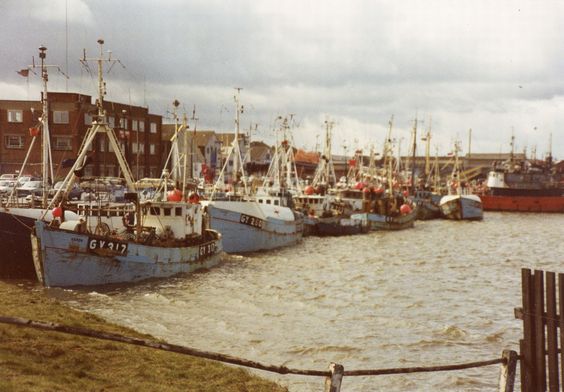
What am I writing about this time? In a nutshell, growing up in a northern fishing town in the UK in hard times. In the novel, Pogsy (the protagonist) is aged 10 going on 11, I remember this age as a sweet-spot, when the world of imagination was beginning to fade and the world of realism was taking over. Timewise, Pogsy’s transition into an adult happens to coincide with massive worldwide upheaval. In the summer/fall of ’73 we had the Second Cod War with Iceland, and war in the Middle East, which initiated an oil crisis, which in turn caused the price of petrol to skyrocket. Edward Heath’s government soon came under pressure from the Miner’s Unions who wanted more money, and caused power shortages / blackouts in order to get it. The government response was to declare a three-day working week and petrol rationing. There was a flour shortage and later a sugar shortage. But people got by and made do. Having a sense of humour helped.
For Pogsy, this is a very exciting time to be alive. The reduced working week means less security misters going about their business. With the help of his gang, he’s able to build the greatest den in the history of dens, hidden away in a secret location – until a new kid in class threatens everything he’s built. With no cameras or mobile phones, and a lot of relative freedoms, we get to take part in all of Pogsy’s adventures and confrontations, sharing in his ups and downs, and one of the great mysteries of life: why are grown-ups so stupid? Pogsy discovers that his dad has a side-business dealing in fish, which is the main currency of the town’s underground black market. He notices that with the end of the Cod War, there is less fish to go around. When Great Britain joins the Common Market on 1st January 1974, and all the UK’s inland fishing grounds are opened up to French and Spanish trawlers, the repercussions for the town are catastrophic. Dad is soon forced to find a new currency, which is acceptable to all the traders he has to deal with. Pogsy sets out on a quest to discover what it is.
First draft completed, let the editing begin…
It’s been a while since I last wrote anything Ferrety, mainly because I’ve had my head down in the day job keeping the country secure from foreign interference.
I work in cyber-security and at the moment everyone wants people with my skills. It’s nice to be in high demand, but it doesn’t half soak up the bandwidth – leaving me with little free time to write. Sure, I’ve been banging out reports for the last three years but it doesn’t satisfy in the same way that plotting the ins and outs of a story does. Anyway, I’ve reached the point where I’m a bit frazzled and I need to do something different.
Three months of freedom coming up!
The question is – am I going to write the follow up to Ferret, which involves all my favourite things such as computer games, hacking and a loony conspiracy, or am I going to write the novel that the missus has been badgering me to write for the last 20 years?
At the moment the missus is winning, which means Pornofish is winning. What’s a Pornofish I hear you ask? Well, it’s a made-up word. The novel is a story about fish. Specifically black market fish and the hidden fish economy of the town in which I grew up, until all that nonsense came to an end in the mid-1970s thanks to the second and third Cod Wars. There’s some porn in it, but only in passing – which means in terms of priority it should be called ‘Fishporn’… but somehow that doesn’t really work. I’m sure David Attenborough has a ton of the stuff, but what he does in his spare time is his own business. Hence Pornofish wins. Pogsy is the protagonist of the piece. He’s a ten year old boy whose ambition is to become the leader of the gang rather than always be number two. However, the leader of the gang isn’t going to give up his position that easily. So a story of self-discovery and ambition, set against a backdrop of the Cod Wars, the Three Day week, political turmoil, inequality and power cuts.
I’m going to be blogging at www.philliplegard.com rather than here, so pop on over and give me a follow. You can also find me on Facebook.
It’s taken me a lot of page wrangling to get there, but finally Ferret is coming out in paperback!
The release date is set at Friday 15th September, available on Amazon.
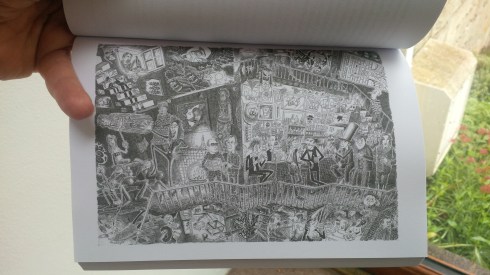
This is the same version as the e-book, with the exception of a single pesky comma that shouldn’t have been there. As a perfectionist, I saw the opportunity to remove it and did so. The biggest issue I had with the e-book was that the illustrations were not inline with the text as I originally envisaged them. To my (uncultured) mind this spoiled the flow of the story somewhat. That’s now fixed. As a bonus there are 7 x vignettes which aren’t in the e-book. They’re not exactly new as they’ve all been extracted from the full page illustrations. Overall, in my opinion, they add to the Ferret feel.
Personally I’m truly delighted with the finished article. It does justice to Richard’s crazy artwork in a way that the e-book didn’t.
Enjoy the read – it’s an awesome adventure!
Phillip Legard
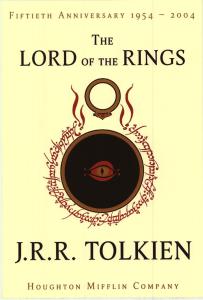 I’ve always loved reading, be it comics or novels and from a young age I could often be found lying in the corner of the lounge, head in the pages of a book. My mum was an English teacher, so Enid Blyton was strictly verboten – as in her work was not allowed in the house. Everything on the home bookshelf was game, including my dad’s many volumes of very rude Rugby Songs, some of which my brother and I learned and then recited in public, causing much parental embarrassment. My early leaning was always towards science fiction, thanks mainly to Gerry Anderson; as a teen, I moved into fantasy, powered by the discovery of Michael Moorcock, Tolkien and Dungeons & Dragons. Sometime in the mid 70s, I bought the Lord of the Rings as a three volume set, having begun reading it around a friend’s house. It was the first printed book I’d ever held in my hand that totally blew me away. If you search Google for ‘LOTR book cover’ there are hundreds of images to choose from, covering many reprints in many languages. The set that I had was similar to the illustration here – simple, understated, yet profound in its symbology. When I held the book in my hand, moving my finger around the one ring and the Dark Lord’s incantation, it felt as though the novel was possessed by an arcane power.
The second novel I encountered that had a presence was Terry Pratchett’s ‘The Colour of Magic‘ and shortly afterwards ‘The Light Fantastic‘. In both cases, it was Josh Kirby’s artwork that initially hooked me. Pratchett’s writing was fresh and funny, it blew away the cobwebs of traditional fantasy, which had become trapped within its own framework of stale plots and staid characters. As I read both books, I felt as though I was holding a complete package that oozed magical charm. [As an aside, Harry Potter has never done it for me, but I have a couple of friends who had a similar experience with some of the hardback editions to the point where they couldn’t put the books down!]
When I set out to present The Ferret Files, I did so as an independent author with full control over the internal artwork, the contents and the cover. I was intent on creating something that spoke to the reader before the pages were ever turned. Why then, as a massive consumer of paperback and hardback books for most of my life, with a vision to create something truly awesome, did I opt to publish Ferret as an e-book only? That’s a question that’s not only haunted me for the early part of 2017, but it was also the most asked question by my readers. One of the primary drivers for going digital was a fear that the original artwork wouldn’t scale down for print. Richard’s full page drawings are A3, and they’re very detailed. Astonishing, in fact. Hence I shied away from producing a physical print version because I didn’t want to create an inferior product. What I didn’t know when I set out on my journey is that one of the limitations of digital is that images cannot be embedded in with the text. As a result, the e-book didn’t fully realise my dream.
Print-on-Demand
 Having worked in IT for most of my life, keeping up with trends as they emerge, I decided it was time to dip my toe in the water and remedy the situation with a Print-on-Demand (PoD) version of Ferret. I mean, how difficult could it possibly be? The question was posed on a Friday afternoon three weeks ago. I now have the answer…
PoD is exactly what the title suggests. An electronic copy of your work is uploaded to a central location and when a customer presses the button to buy, a copy is printed off within the country of purchase and despatched within a few days. I figured this was likely to be expensive, but as it happens I was wrong. As a printing methodology PoD is cost effective up to around 50 copies of a book. After that, traditional print wins the day. I had a quick look around Amazon to see what other authors are doing, and two options became immediately obvious. There’s Amazon’s own offering called CreateSpace and there’s Ingram Spark. As an Amazon subsidiary, I decided that CreateSpace must be pretty good so they made the cut. Ingram Spark, as an independent author platform also ticked all my boxes – the downside being that it costs $$$ to create a title (unless you happen to be a member of the Alliance of Independent Authors, which I am). I came across a third option, a site called Lulu, which I also wanted to explore. A comparison of the three options suggests that Lulu is the more expensive of the trio in terms of the cost to print a book, with CreateSpace and Ingram Spark costing roughly the same. On the plus side, the Lulu site has a lot of help to offer, as well as some very useful and active forums. Most importantly of all, I found and downloaded a free A5 template with instructions (go here: http://www.lulu.com/create/books and click ‘Download Template’). Once you have this piece of the jigsaw puzzle, everything else becomes so much easier. I wish I’d found this link at the beginning, rather than two weeks in.
Lulu allows you to format the book and cover, do some basic checks and then you’re off to the races. It’s very much down to you, with no human checks performed. Ingram Spark inserts a human check at each of the major stages of production, so is a little bit slower. CreateSpace follows the same format. Both of these services aid in preventing mistakes around the formatting of the interior and the cover, which believe me are easy to make.
I’m not going to go into massive detail about everything PoD related, but here are the basics.
The Interior
The Cover
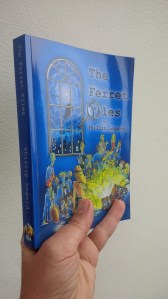 Once the uploads are completed, all that remains is to order a proof copy of your work and wait for it to arrive. Mine turned up yesterday and there are a couple of small amendments that need to be made (my na
 me is ever-so-slightly wonky on the spine and I discovered a missing ‘“‘ in one of the later chapters), but otherwise we’re good to go. All in all, my experience of PoD has been really good if somewhat drawn out, but then I enjoy learning new things so it’s not a hardship. Plus I have a genuine enthusiasm for creating printed works, so the roadblocks thrown up in front of me were only ever going to be driven over. I’m really pleased with the results and unless an earthquake strikes Ferret will be out as a POD novel by the end of August.
If you have a project that’s underway and you need any encouragement I’m happy to hear from you…
One of many items on my agenda for this year is to produce a print-on-demand copy of Ferret. I used a third party company to assemble the e-book, mainly because my head was full of other things at the time and I didn’t have the space to learn yet another way to format text. With hindsight, I wish I’d explored all of the options available and done it myself, because one of the things I’ve always found exciting is holding a finished, quality document in my hand, even if it is virtual. We are where we are, as the saying goes.
For the record, I have no issues with the quality of the e-book; I do, however, have a few issues with the format, the biggest of which is the (non) placement of graphics inline with the text. I’ll cover the whole print-on-demand experience in a follow-up article, as I learned a lot of tricks that I’d like to pass on.
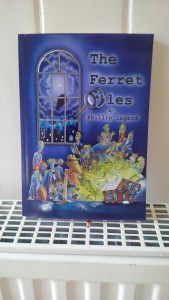
For now, here’s a preview of the finished cover:
I have a proof copy winging its way through the ether. Hopefully everything will be just fine and I’ll be able to make Ferret available in printed form within the next few weeks. I’m really excited to see the finished article as the e-book didn’t do justice to the artwork. Fingers crossed that those big pictures aren’t one messy splodge!
 I’m busy learning how to market e-books, having done very little research into the subject prior to publishing my first novel. I have a very curious nature, so reading and learning new things is not something I run away from – rather I run towards the opportunity. Having spent around ten days investigating how the e-book / online publishing business works, I’m reminded of something that Mark Twain once said:
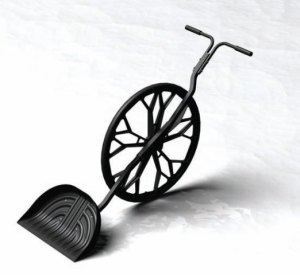
During the gold rush it’s a good time to be in the pick and shovel business.
Although the odd person struck it rich during the California gold rush of the 1840s & 50s, those who made a ton of money were the people selling the tools with which to locate, extract and refine gold. I’m guessing approx 1:10,000 struck it rich, whereas all 10,000 required a shovel.
The prospecting business model can be applied to many areas of life. Back in the early days of the Internet, there was a rush for dot.com domain names. Everyone was busy registering everything in sight, in the hope of striking it lucky and selling their domain name on to a big company that was slow off the mark, thus pocketing $million$. There were one or two notable sales made before the rules were changed to make domain squatting an offense, but when the dust cleared the folks that made a mint out of the domain name gold rush were the registrars not the squatters.
What I’ve discovered in my foray into online publishing is that there are a heck of a lot of peeps out there in internet land flogging shovels of every shape and size. Naturally, they’re not called shovels, but that’s definitely what they are. For instance:
 Why do I want to create an email list? Well… according to research, most people visit a website once and don’t go back. Getting their email address is a means to continually poke them remotely with super offers until they cave in. Get my other novel for free. Get the first book in the trilogy for free. Blah, blah. An email list is your list of valued customers, and as an author it’s your most valuable asset next to your published works(s). I’ve visited the blogs of other authors to see what they’re doing, and indeed the successful ones are prompting visitors to sign-on to the mailing list. In sales terms, this is known as the ‘Sales Funnel’ and it’s the modern equivalent of making sure you get a prospective customer’s phone number before they leave the shop. After that, it’s simply a case of hassling them in the nicest possible way until they eventually surrender to your charms.
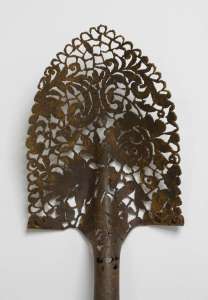 I haven’t even covered the shovels that are for sale prior to writing a novel. You can buy advice on: better writing, better structure, how to develop characters, killer beginnings, killer endings, pace, etc. In fact, it looks to me like there are vastly more people out there selling shovels for writing and publishing than there are authors successfully selling golden novels. Perhaps that what I should do next: create another shovel. It’ll have to be a very pretty shovel that no one else has yet made, full of fantastic new ideas on how to do all of the above at very little expense.
What do you think? Does the world of online publishing need more shovels, or is there not enough gold out there to warrant it?
 It’s been a strange few weeks. Due to a series of cock-ups, The Ferret Files was launched on Amazon and then on Apple way before the press campaign was ready. In fact, the people who are organising the release still haven’t got their act together after five weeks worth of messing about. Given it’s Christmas, this is kind of understandable but at the same time unacceptable. Hence I had to just get on with it.
I’ve discovered that this requires two different hats: the writer’s cap and the author’s fedora. I wore the writer’s cap for months on end, staring out the window when plotting story lines, and using it to scoop cold water onto my keyboard when the keys were sizzling from an obsessive dump of ideas. I’m done with the cap for now. It’s onto the fedora, which means I get to talking about the novel and the characters in it, rather than the process of writing.
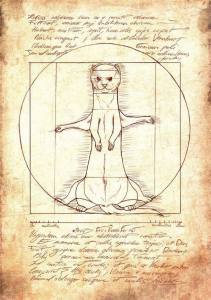
What I’ve found is that I have the weirdest feelings when it comes to Ferret and friends. Now they’re in the public domain, they’re no longer exclusively my characters: suddenly, they belong to the readers as well. Everyone who meets Ferret will have a slightly different take on who he is. The same applies to Cyrano, Marcus and Tristan, Damien and Eric, Flamen and Sir Edward, and Marianne and Juliet. In a way it’s liberating to set the cast free, but it also places a lot of responsibility on my shoulders. Their stories are not yet finished: we’ve still got a way to go to find out what happens to them all. I’ve plotted a trilogy of books with the same core cast. I know roughly where we’re headed, but not the fine detail. There are also three short stories which take place between books two and three. Bob will play a greater part in these tales. The characters whose arcs I’m really looking forward to developing are the hard-done-to juniors: Eric, Rajesh and Xara. And of course the centurion. Boy, are we all in for a surprise with him.
It took me a long time to get Ferret to a degree of polished that I can live with. I’ve downloaded quite a few cheap e-books and the level of finish is not something I’d be happy with. But then I have a history of producing quality output. If I lend my name to something, it will be good. Anyone who buys into The Ferret Files is buying into a world full of crazy people and cracked ideas. Once you read it, you’ll get that. For a long time I wondered about writing under a pseudonym. Outside of my life as a writer and author, I have an IT consultancy to run. In the end I felt that writing under a different name was the wrong thing to do. I wrote Ferret. I’m proud of my achievement. And it’s too late to back out now. It’s a done deal.
If there’s anything you’d like to know about Ferret and friends, drop me an email at: Phillip@detectingconsultant.com. I’ll answer the best questions in a future blog post.
Meanwhile, have a great Christmas y’all…
Purchase Ferret


"As we relate, so we think."
I deconstruct secrets hidden in plain sight. I'm not always right, but all methods are shown so you know how I reached my conclusions!
How easy it is to make people believe a lie, and how hard it is to undo that work again! (Mark Twain)
Personal Blog
We are here and it is now. Further than that, all human knowledge is moonshine. -HL Mencken
FOR RADICAL REALIST FREE-SPEECH REVOLUTION
Take a stroll along the Avenue of Artistic Ingenuity
Let's Read
Live Your Best Life
Oh! Take a shit, read a story. - My Mother on flash fiction
Tales from the mouth of a wolf
Hilarious, heartwarming mystery & mayhem set mostly in the Cotswolds
Making marks to achieve better copy.
The home of London's Premier Detecting Consultant
A Flash Fiction Writing Community
Natalie. Writer. Photographer. Etc.
A blog about writing, publishing, self-publishing and bookish doings by Roz Morris
because facts really should be sacred

 The Ferret Files